Learnings from the field, and Climate collaborations: What shaped MIF’s March
Agriculture, circularity, climate partnerships and long-term institutional building were in focus for Marico Innovation Foundation (MIF) this month.
By Marico Innovation Foundation March 25, 2026 | 11:15 AM
March was a month of movement and execution at Marico Innovation Foundation (MIF). Our focus remained on a central question: what does it take to help promising ideas scale in the real world? Across conversations, content, convenings, and on-ground work, the emphasis stayed on understanding what works, and what holds up at scale.
On the ground: Advancing the MIF x Samunnati Foundation Agri-pilot
From insight to implementation—working alongside farmers to test what holds on the ground
Work on the agri-pilot continued this month, moving into a more engaged phase of implementation. The focus was on holding awareness sessions to introduce farmers to the technologies and their role in reducing post-harvest losses. A baseline survey covering 1,000 farmers across Mirzapur and Varanasi was also completed, establishing an early understanding of on-ground challenges. In parallel, site preparations for installation of these technologies is progressing.
Subscribe to InnoWin
Get insights, lessons, and candid stories from entrepreneurs, investors, and change-makers driving India's innovation ecosystem—once a month.
It was also International Women’s Day on 8th March, a moment to recognise the critical role of women in agriculture. As 2026 places a spotlight on women farmers, the pilot’s on-ground work served as a reminder of their central role in strengthening agricultural systems.
Global Recycling Day: Circularity through Ecosystems
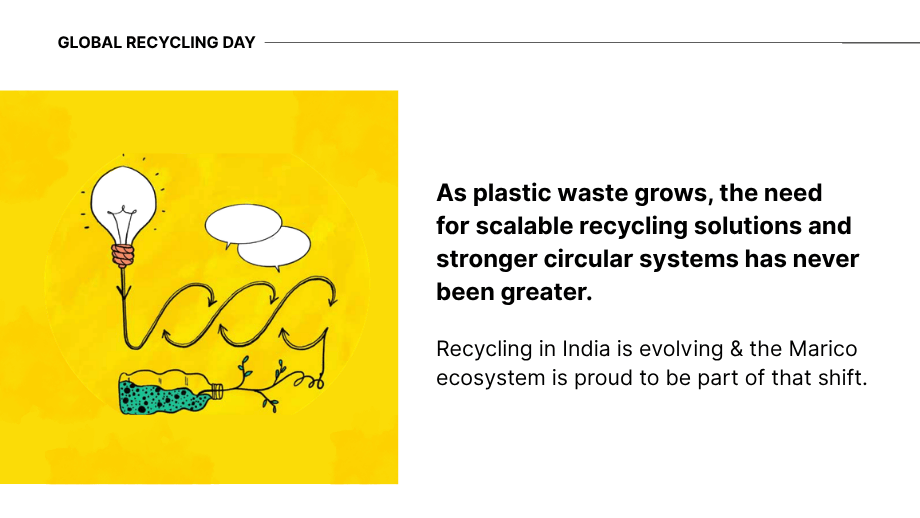
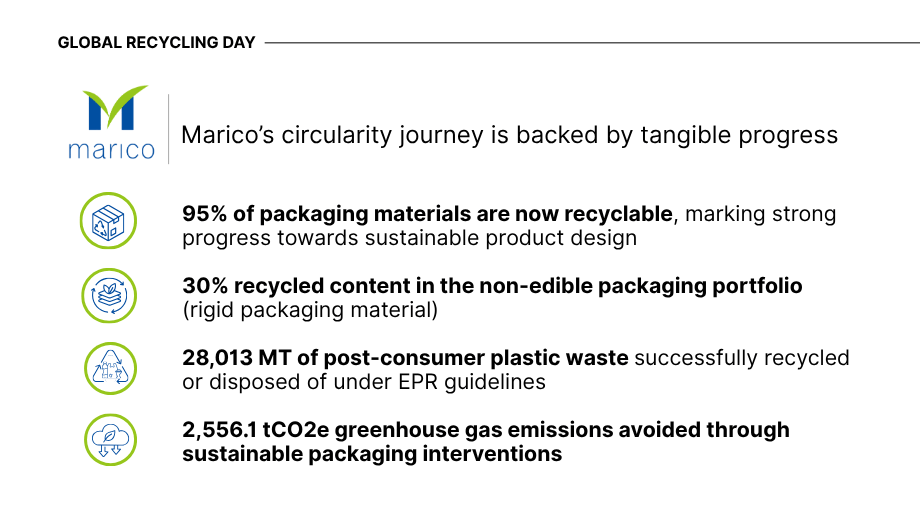
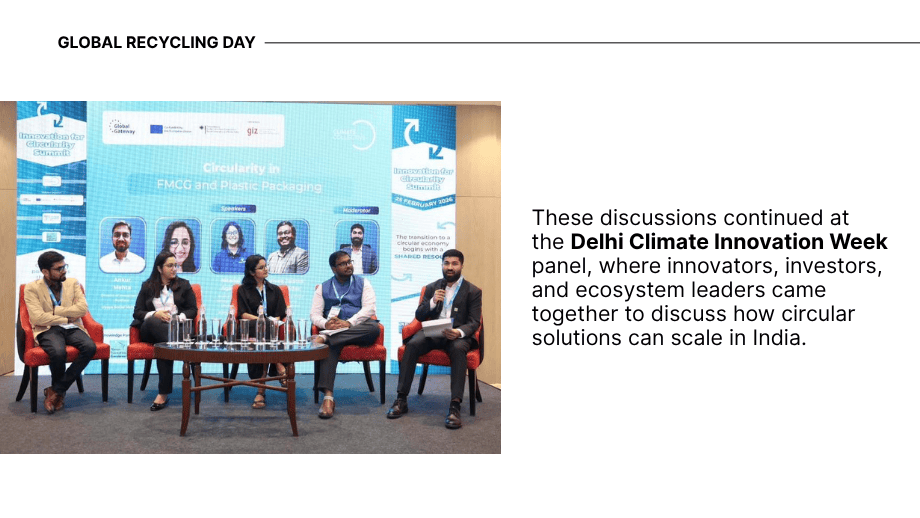
This systems approach continues to shape the work across the Marico ecosystem—from advancing recyclable packaging to strengthening recovery systems and contributing to platforms such as the India Plastics Pact.
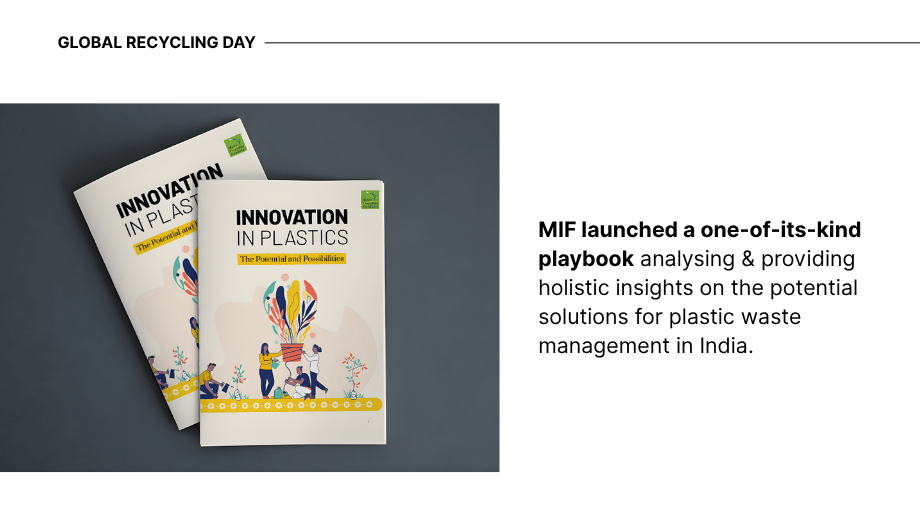
At Marico Innovation Foundation, this means bringing together innovators, industry stakeholders, and ecosystem partners through platforms like SCALE. The emphasis is on enabling solutions that are innovative, but also viable within existing systems. The Innovation in Plastics playbook, on the Potential and Possibilities is one such knowledge product from MIF.
Yet even as circularity gains momentum across the ecosystem, one question remains: how do promising recycling innovations move from technical readiness to real-world scale?
Bridging the Scale gap in Plastics
From research to real-world impact—what it takes to scale plastic recycling in India.
Innovation often hits a bottleneck between the laboratory and the marketplace.
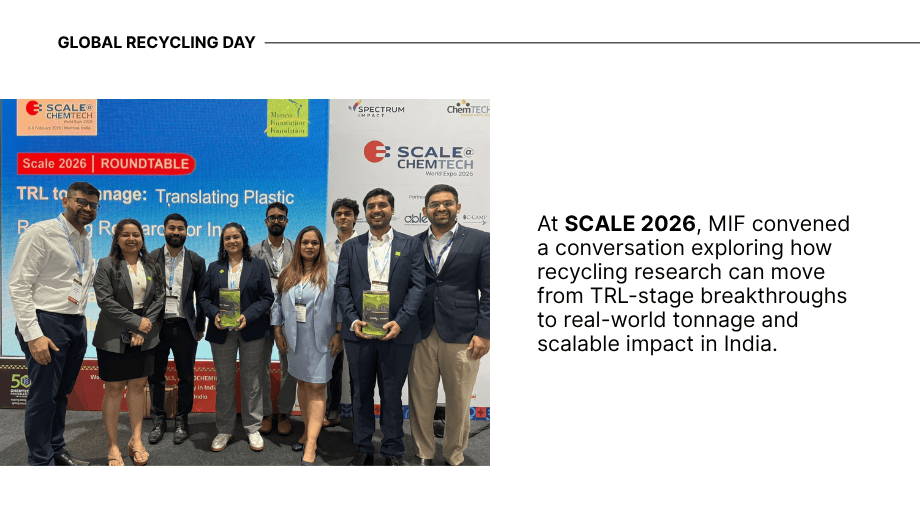
In our article revisiting key ideas from SCALE 2026, we examined this gap: the distance between technological readiness and actual processing volumes. While recycling technologies continue to advance, their movement into large-scale application remains uneven.
The reasons are structural: fragmented supply chains, inconsistent waste streams, and limited demand for recycled materials.
🧩 Test Your Innovation IQ | Don’t Scroll Down
Global Recycling Day was established to recognize recycling as a “Seventh Resource” alongside water, air, oil, natural gas, coal, and minerals.
True
False
From the Corner of the Marico Chairman
As global climate conversations evolve, the focus is shifting from “commitments” to “corridors.” In a recent reflection, Marico Limited Chairman Harsh Mariwala emphasized that for India to achieve its net-zero goals, it must leverage international cooperation to scale green technologies.
In an authored piece forBusiness World, Mr. Mariwala outlined the India-UK-Europe Green Corridor as a vital framework for decarbonisation. He identified three essential levers for this transition: capital, technology, and markets.
Together, they point to a broader principle: progress becomes possible when ecosystems move together.
Harsh Mariwala speaking at India Exchange 2026 event on climate and sustainability
Leadership Insights: Building Institutions that last
A perspective on long-term impact emerged in a recent feature by CSR Universe, where Suranjana Ghosh, Head, Marico Innovation Foundation, spoke about the importance of building institutions that endure.
Her reflections highlight the role of patient capital, collaborative networks, and sustained engagement with on-ground realities. These are often less visible parts of impact—but critical to ensuring that progress is achieved, and sustained.
🧩The Answer to the Quiz
True: The initiative highlights that recycling is vital to preserving natural resources and reducing the world’s carbon footprint.
Closing Note
March reinforced a simple truth. Complex problems don’t just need good ideas. They need systems to help those ideas scale.
As we head into April, we remain focused on the field, the ecosystem, and the institutions that can help shape India’s innovation future.
Subscribe to InnoWin, MIF’s monthly newsletter, and get insights, lessons and candid stories from entrepreneurs, investors, and change-makers addressing India’s most pressing challenges.
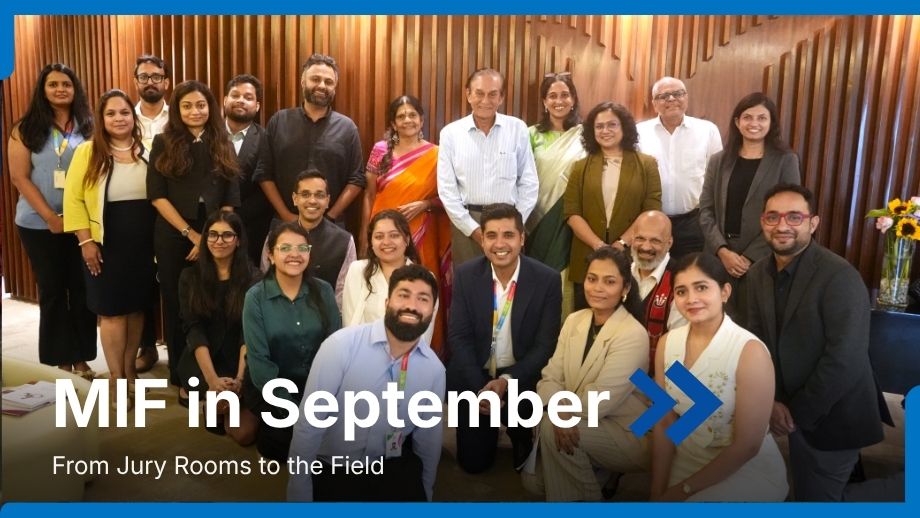
Round 1 Jury Deliberations for Indian Innovation Icons 2027, field learnings from Uttar Pradesh and conversations on circular plastics—September at MIF.
A month of on-ground agri-tech implementation, sharper strategic alignment and reflections on building for the long term at Marico Innovation Foundation.