Innovation
InnoWin | Solving problems from the fundamentals, not the surface
Deepak Rajmohan, Co-founder of GreenPod Labs, reflects on first-principles thinking, learning from failure, and building sustainable solutions.
October 14, 2026
At SCALE 2026, Marico Innovation Foundation examined how localisation, modular design, and new financing models can turn plastic recycling research into tonnage on the ground and scalable impact.

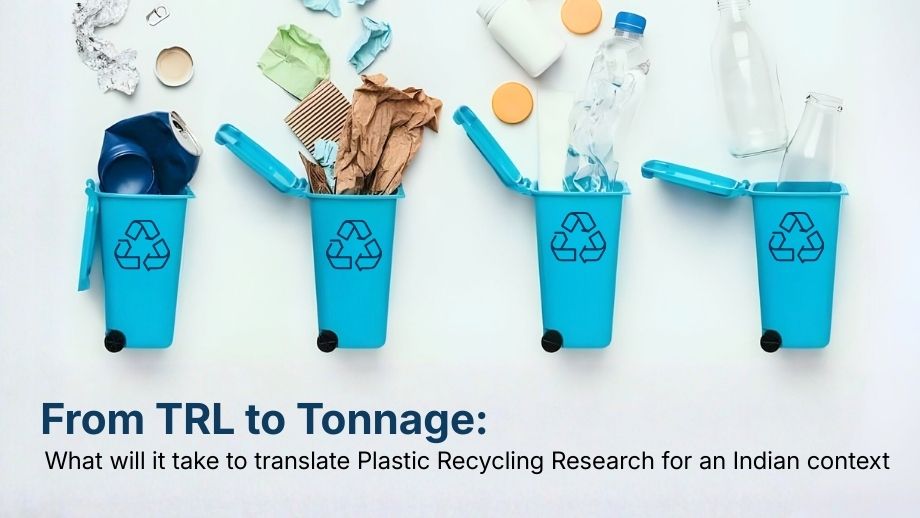
India’s plastic recycling story is often told in extremes. On one hand, the country has scale—millions of tonnes of plastic waste generated every year, thousands of recycling units, and one of the world’s largest informal collection networks. On the other hand it has limits; only about 30% of plastic waste is recycled, and less than 5% of installed capacity produces high-quality, closed-loop recycled material suitable for brand-grade applications. Between these two realities lies a persistent gap: the inability to translate promising research and pilot technologies into reliable, large-scale outcomes.
It is this gap that the Marico Innovation Foundation sought to address at SCALE 2026 through a closed-door roundtable,“TRL to Tonnage: Translating Plastic Recycling Research for India”. The discussion brought together leading voices from polymer science, materials research, and industrial R&D to unpack what it truly takes to move a technology from Technology Readiness Level (TRL) 5 in the lab to TRL 9 at commercial scale.

A central theme at the discussion was the disconnect between laboratory research and real-world feedstock. Most lab-scale work relies on clean, representative samples. In practice, Indian waste streams are mixed, contaminated, and inconsistent—conditions that can derail even the most well-designed of processes.
Participants emphasised that technology itself is rarely the primary constraint. Instead, collections, segregation quality, and logistics—especially from non-urban and dispersed locations—determine feasibility. While centralised facilities play an important role, they are insufficient. Modular, decentralised processing units closer to waste-generation points were seen as critical to preserving feedstock quality and reducing logistics costs.

Technical constraints at the polymer and packaging level add a further layer of complexity. Even 1–2% cross-contamination between polypropylene (PP) and polyethylene (PE) can compromise recyclate quality, yet conventional detection systems struggle to identify such low-level mix-ups. Additives, inks, and multilayer packaging further complicate recycling, while the diversity of end-use applications means that a single PCR output cannot meet all performance requirements.
These challenges help explain why India’s recycling system remains largely volume-driven rather than quality-driven.
The roundtable highlighted that traditional project finance models are poorly aligned with first-of-a-kind (FOAK) recycling assets. Investors typically look for clear offtake visibility and proven performance benchmarks before committing capital. One pathway discussed was the role of Venture Studio-like models that can shepherd technologies from lab to pilot to commercialisation—helping bridge the finance that stalls so many innovations. As one insight from the room put it succinctly: market pull precedes capital.
At MIF, these challenges are not abstract. Through our Scale-Up Program, we work closely with entrepreneurs navigating this exact journey—from technical validation to market adoption.
Our Plastic Waste Portfolio reflects the themes that emerged in the roundtable: localisation of technology, integration with Indian feedstock realities, and close collaboration with industry to ensure offtake and performance alignment. These startups represent the “TRL to Tonnage” transition in action—building solutions that can survive outside the lab and deliver impact at scale.
As Varun Hangloo, Head, Scale-Up and New Initiatives at MIF, recently shared on LinkedIn, the transition to a circular economy isn’t just an environmental necessity; it’s an economic imperative. By 2030, India could lose over USD 133 billion in material value if we don’t fix our plastic packaging waste systems.
The consensus from the roundtable was that India should not simply import European recycling plants wholesale. Instead, it must import ideas, benchmarks, and validation logic—and redesign systems for Indian conditions. This includes local fabrication to reduce CAPEX, modular and serviceable infrastructure to improve uptime, shared pilot facilities for small-batch validation, and policy reforms to remove frictions such as the high GST burden on recycled streams.
India does not lack intellect, research, or innovation. What it needs is a stronger bridge between the lab bench and the recycling plant. The insights from TRL to Tonnage also capture the larger intent of SCALE 2026: moving beyond pilots, narratives, and compliance toward durable, scalable impact.
📑♻️Interested in plastic waste management? Read more in MIF’s first-of-its-kind playbook that focuses on innovations that can help build a resilient circular economy for plastics in India. The full report is here.
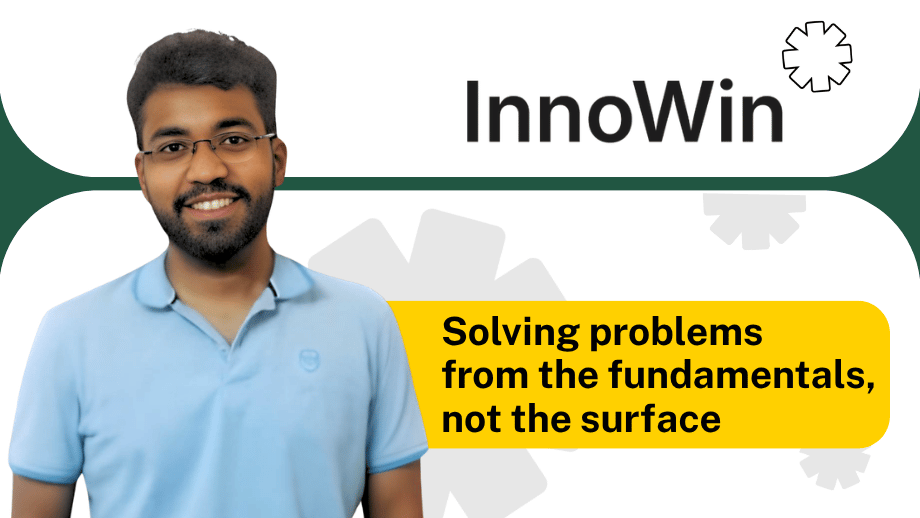
Deepak Rajmohan, Co-founder of GreenPod Labs, reflects on first-principles thinking, learning from failure, and building sustainable solutions.
Discover how Marico Innovation Foundation evaluates and elevates the game-changing innovations with the potential to create lasting impact.
Saumya, Co-founder of Kheyti, reflects on the challenges of building climate-smart solutions.

Get insights from entrepreneurs, investors, and change-makers on innovation,
success and what it takes to get there.