Marico Innovation Foundation at Work: Agri-Pilots, Circularity, and Global Climate Conversations
Scaling ideas, strengthening systems, and turning innovation into action across farms and climate platforms in India.
By Marico Innovation Foundation March 5, 2026 | 12:15 PM
February was anything but quiet for Marico Innovation Foundation (MIF). It was a month of early-morning field visits in Mirzapur and Varanasi, closed-door rooms packed with scientists and funders, jury tables in Mumbai, and climate conversations stretching from Delhi to global corridors. Across these forums, MIF helped shape discussions on agri-innovation, circularity, and climate action, while staying anchored to its core belief: India does not lack ideas; it needs the right pathways to help them scale.
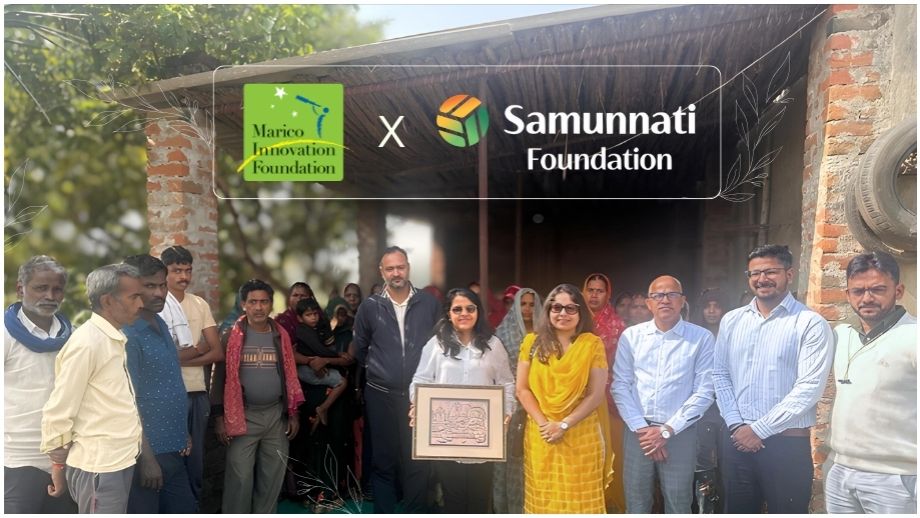
MIF X Samunnati Pilot: Reducing Post-Harvest Losses
While farmers face challenges throughout the agricultural cycle, the post-harvest period often leaves them the most vulnerable. Inadequate storage, handling, and market access result in significant losses—estimated at $18.5 billion annually, according to a 2022 study by NABCONS. To address this, MIF partnered with the Samunnati Foundation in January 2026 to establish an Agri-Pilot to enable post-harvest resilience.
Subscribe to InnoWin
Get insights, lessons, and candid stories from entrepreneurs, investors, and change-makers driving India's innovation ecosystem—once a month.
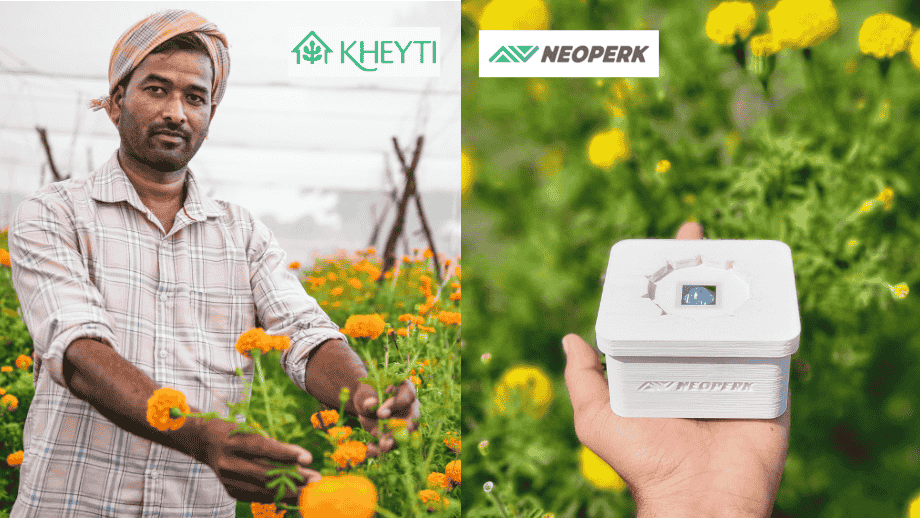
Spanning across twenty villages in Mirzapur and Varanasi and engaging over 1,000 farmers, the pilot has begun with field mobilisation, farmer interactions, and data collection. The next phase will focus on live demonstrations of post-harvest technologies, hands-on usage, and farmer feedback. Based on early insights, MIF has curated a portfolio of startups whose solutions directly address local post-harvest challenges. The goal is to not only reduce post-harvest losses and improve farmer incomes, but also to build a replicable, need-driven model for future interventions.
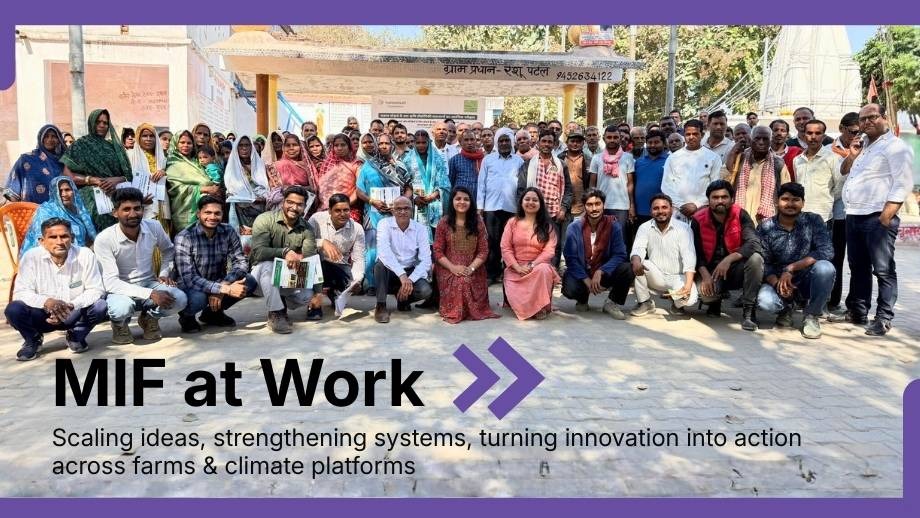
MIF team on field visit to Varanasi for the agri-pilot on reducing post harvest losses
From the field, Vartika Agarwal, Lead, Agriculture and Clean Technology Vertical at MIF reflected on a field visit to Varanasi as part of this pilot—listening to farmers speak about post-harvest losses, income uncertainty, and everyday operational challenges. Her takeaway was simple but powerful: many of the toughest problems remain invisible unless you are physically present. Technology alone doesn’t create impact. Context does. The pilot is being shaped as much by honest conversations and lived realities as it is by product demos and data. Watch out for more updates from the field.
MIF in Action | All that happened in February 2026
📍 Scale 2026 Round Table:
On 5 February, MIF hosted a closed-door roundtable at SCALE 2026 focused on translating plastic recycling research for India. A key insight emerged. India’s plastic recycling system struggles less because of missing technology and more due to poor collection, mixed waste, and inconsistent feedstock quality. While mechanical recycling dominates, poor waste quality means supply cannot meet rising demand for high-quality recycled plastic—creating an opportunity for brands to strengthen collection systems and improve recycling outcomes.
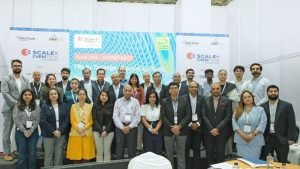
MIF convened a closed-door roundtable on TRL to Tonnage at SCALE 2026
As Varun Hangloo, Head, Scale-Up and New Initiatives at MIF shared, the room brought together scientists, funders, brands, institutions, startups, and recyclers—with no stage and no presentation marathons, just one agenda: How do we move from TRL—technology readiness levels—to Tonnage?
📍 Mumbai Climate Week: Jury, Partners, and Innovation on Display
MIF participated as a partner at the Mumbai Climate Week 2026 held from 17–19 February. The platform brought together policymakers, corporates, investors, and innovators to accelerate practical climate solutions for India and the Global South.
As part of this, MIF’s Head, Suranjana Ghosh, served as a jury member for the Mumbai Innovation Challenge, supported by Monitor Deloitte, Project Mumbai and NSE India. She noted how inspiring it was to see the diversity of innovative, deployable climate solutions. Alongside the formal sessions, it was the serendipitous exchange of ideas and insights on the sidelines reaffirmed MIF’s belief in the collective impact each player in the ecosystem can create.
📍 Delhi Climate Innovation Week: Circularity in FMCG
MIF joined Climate Collective as a Knowledge Partner at the Delhi Climate Innovation Week
MIF also partnered with Climate Collective to conduct a panel at the Delhi Climate Innovation Week on circularity in FMCG. The discussion brought brands and recyclers together to talk about shared infrastructure, harmonised standards, and financing models needed to scale circular supply chains.
For MIF, it was another opportunity to bring diverse actors into the same room and deepen conversations on how circularity can move from intent to implementation across fast-moving consumer categories.
📍 Xynteo India Exchange 2026: Building for the Long Term
At India Exchange 2026 — reinforcing that sustainability must be economically viable to scale.
At the India Exchange 2026 in New Delhi on 24–25 February, the Marico Chairman, Mr. Harsh Mariwala delivered a keynote address and masterclass on building for the long term. His message was simple: sustainability only succeeds when it becomes economically viable.
He shared Marico’s journey—from pioneering plastic packaging for coconut oil to now building a $100 million recycling facility in Hyderabad—as an example of how business models can evolve towards circularity. For the India–UK/Europe Green Corridor, he set a clear target: 5 to 7 cross-border alliances and scalable climate technologies exported from India within 24 months.
“Businesses were first optimised for efficiency,” he noted. “Now, they must optimise for sustainability.” The most admired companies of the next decade, he suggested, won’t just be the fastest growing—they will be the most trusted.
From the Corner of the Marico Chairman
“India does not lack ideas. It often lacks the support to take them from prototype to a real, scaled business.”
— Harsh Mariwala, Chairman, Marico Limited. In February, he spoke about the “messy middle” and reflected on the journey and founding purpose of Marico Innovation Foundation.
His reflections are a reminder that innovation in India isn’t constrained by ideas, but by the support systems that help them cross the “messy middle”. As we look ahead to March, that is the work that continues—building pathways, partners, and platforms to take promising solutions from prototype to truly scaled impact.
Subscribe to InnoWin, MIF’s monthly newsletter, and get insights from entrepreneurs, investors, and change-makers on innovation, success and what it takes to get there.