Reducing Post-Harvest Losses in Uttar Pradesh: Inside Marico Innovation Foundation’s Agri Pilot with Samunnati Foundation
How MIF, Samunnati Foundation and agri-startups are piloting solutions in Mirzapur and Varanasi
By Marico Innovation Foundation February 11, 2026 | 1:41 PM
For many farmers, the most uncertain phase of the agricultural cycle begins not during sowing or cultivation, but after harvest. Vegetables that require months of labour and investment can lose a significant portion of their value within days due to spoilage, lack of storage, and limited access to the right markets. These post-harvest losses directly erode farmer incomes and remain one of the most persistent inefficiencies in India’s agricultural value chains. According to a 2022 NABARD Consultancy Services (NABCONS) study, India faces approximately ₹1.53 lakh crore ($18.5 billion) of food loss annually. In Uttar Pradesh key losses occur due to inefficient handling and storage. These include 6-15% for fruits and more than 4.5-11.5% for vegetables. The losses start from inefficient harvesting, improper handling, lack of cold chains, and poor transportation networks result in greater economic burden on small holder farmers.
At MIF, agri-tech was identified as a priority vertical with the objective of supporting startups building scalable, farmer-centric solutions. The Agri-tech pilot emerged from this intent—shaped by evidence, informed by farmer realities, and designed to bridge the gap between innovation and on-ground adoption.
Subscribe to InnoWin
Get insights, lessons, and candid stories from entrepreneurs, investors, and change-makers driving India's innovation ecosystem—once a month.
“Our objective is not just to solve for today’s losses, but to build a model that can be replicated across India. By pairing strong on-ground partnerships with startup-led innovation, we hope to create a blueprint for post-harvest resilience, one that improves incomes, strengthens local economies, and empowers farmers to participate confidently in the value chain.”
—Suranjana Ghosh, Head, Marico Innovation Foundation
From Research to Real Need
Agriculture is not a monolith. It is deeply contextual, geographically varied, and influenced by local realities. Recognising this, MIF adopted a structured, evidence-led approach.
The process began with a mapping of 17 agriculture subsectors across pre-harvest, harvest, and post-harvest stages to understand where innovation could create sustained impact. What became clear early on was that broad, sector-wide interventions often dilute outcomes. To sharpen focus, this mapping was complemented with qualitative research—conversations with agricultural experts and farmers helped build a clear picture of where the most acute gaps existed.
Why Post-Harvest Losses Became the Focus
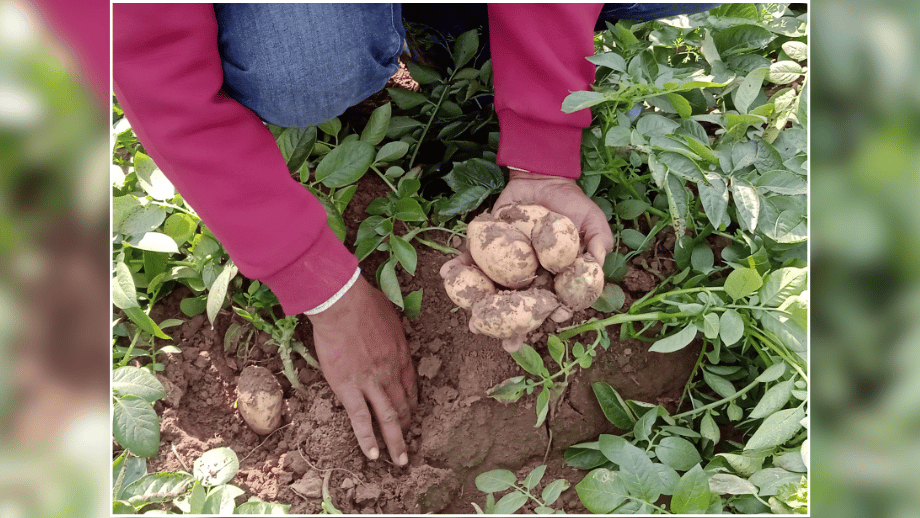
Post-harvest losses emerged as a recurring and critical challenge, particularly in vegetable value chains where the output is perishable, and margins thin. Farmers frequently face a situation where despite a good harvest—inadequate storage and poor post-harvest handling forces them to sell immediately at unfavourable prices or absorb losses if the produce spoils before reaching the market.
Addressing post-harvest inefficiencies offered a clear opportunity to create a direct income impact. Even modest improvements in shelf life, storage conditions, or sorting and grading can significantly improve price realisation for farmers. With this understanding, MIF chose to centre its pilot on practical, affordable, and adaptable post-harvest solutions for smallholders.
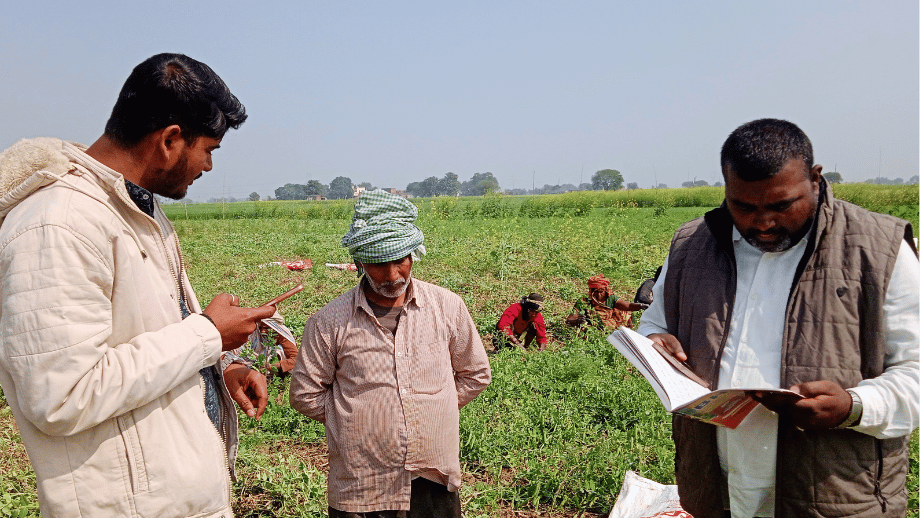
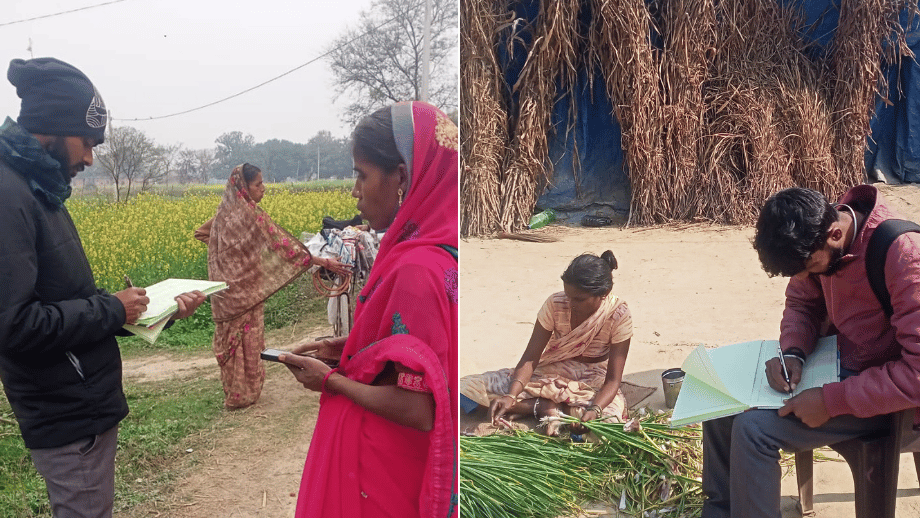
On-ground engagement with farmers to understand crop conditions and challenges
Why Uttar Pradesh—Mirzapur and Varanasi
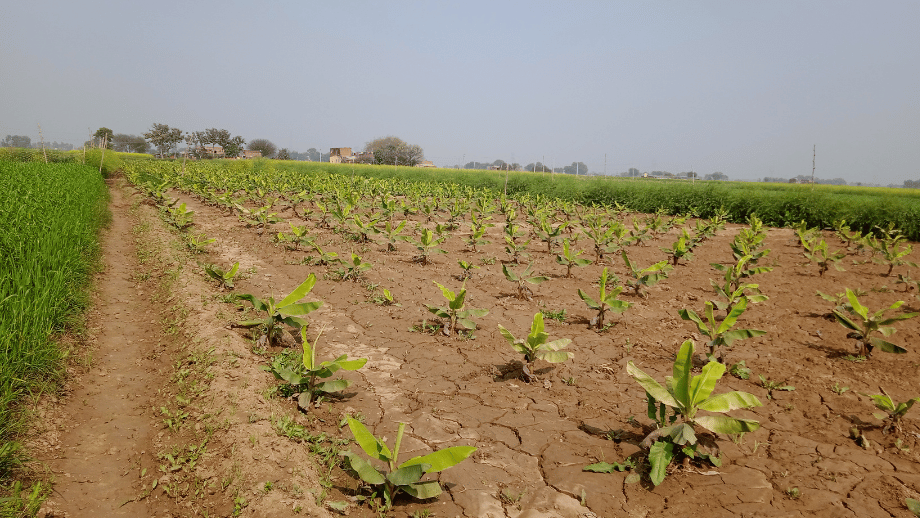
To ensure the intervention was targeted and relevant, MIF focused on Uttar Pradesh, a state with high dependence on agriculture and a large population of marginal and smallholder farmers. Within the state, Mirzapur and Varanasi were selected due to their prominence as vegetable-growing belts and their limited access to post-harvest infrastructure. On-ground visits to both districts reinforced the urgency of the problem. Farmers were aware of and articulated the constraints they worked within. While there was a strong willingness to adopt solutions, awareness and access to existing technologies remained limited. The challenge was not resistance to change, but a lack of exposure and viable options.
Samunnati Foundation as the Implementation Partner
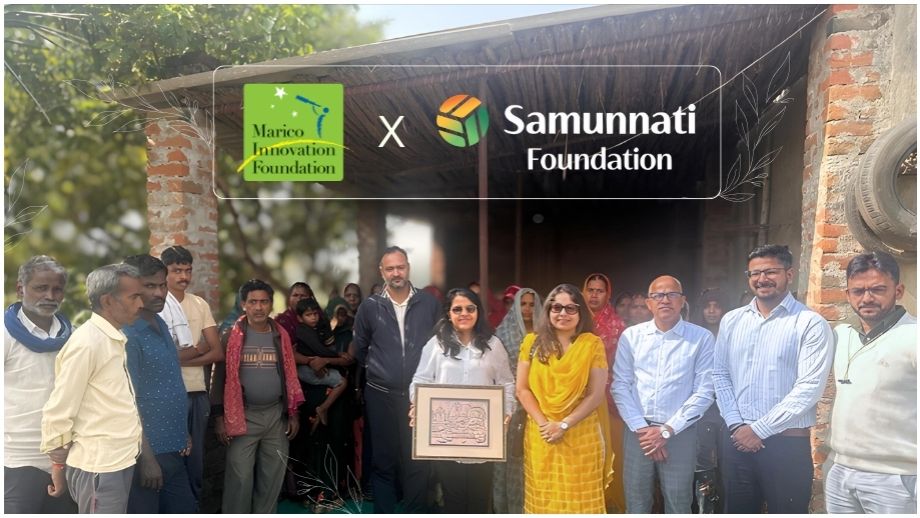
For on-ground execution, MIF partnered with Samunnati Foundation, established to enable inclusive growth for underserved farming communities. Samunnati Foundation brings deep grassroots experience and strong local networks across Uttar Pradesh. In the pilot, Samunnati Foundation plays a critical role in farmer mobilisation, coordination with local institutions, and day-to-day field execution. The Samunnati Foundation is leading baseline surveys, facilitating awareness-building sessions, and supporting technology demonstrations, ensuring that farmer feedback and learning are continuously integrated into the pilot’s design.
“Post-harvest losses are not just a technical problem; they directly affect farmer confidence and income. Through this pilot, our focus at Samunnati Foundation is to work closely with farmers to test solutions that are practical, affordable, and suited to local realities. By grounding innovation in real field conditions, we aim to enable adoption that lasts beyond the pilot period”.
—Samunnati Foundation
Designing the Intervention: Startups at the Core
Based on all these insights, MIF curated a portfolio of startups whose technologies directly address post-harvest challenges faced by farmers in the region. The focus was on solutions that could be demonstrated on the field, easily understood, and integrated into existing practices without heavy capital or operational burdens. The pilot brings together startups such as:
Godaam Innovations : Provides a IoT-based device that transforms traditional onion godowns into smart warehouses
ColdEasy (two products): ColdEasy Room: A low‑power, cost‑effective post‑harvest technology that transforms any room into a cold room andColdEasy Box: A water‑based cooling crates that operate without electricity.
Agrograde : AI based sorting and grading technology
Saptkrishi : It operates on an advanced microclimate-controlled storage system, designed to extend the shelf life of perishable produce without refrigeration, chemicals, or preservatives
Together, these technologies form a complementary portfolio aimed not just at reducing spoilage but at improving the overall quality, shelf life, and marketability of produce.
Implementation and Current Progress
The pilot, which came into effect on 8th Jan 2026 spans twenty villages across Mirzapur and Varanasi, engaging with over 1,000 farmers.
The initial phase focuses on farmer interactions, field mobilisation, and baseline data collection to understand existing practices, losses, and awareness levels.
As the pilot progresses, the emphasis will shift to live demonstrations of post-harvest technologies, hands-on usage by farmers, and continuous feedback loops.
This phased approach allows MIF and its partners to assess what works, refine implementation, and build farmer confidence through real-world results rather than theoretical promise.
Looking Ahead
The objective of this pilot is not only to reduce post-harvest losses and improve farmer incomes, but to create a replicable, need-driven model for future interventions.
By grounding the pilot in evidence, partnering with Samunnati Foundation, a credible implementation partner, and working closely with startups building practical solutions, MIF aims to develop a scalable playbook that can be adapted to other geographies over time. As the project evolves, continuous learning and impact measurement will remain central. The long-term vision is to strengthen startup-led agricultural innovation in ways that respond directly to farmer realities, where technology is not introduced for its own sake, but as a tool to improve resilience, income, and opportunity across the agricultural ecosystem.